
Winter Newsletter - February 2026


Geospatial Data Science Group Newsletter - February 2026
School of Geographical & Earth Sciences | University of Glasgow
Q1 2026
👋 Welcome Note
Dear colleagues, collaborators, and friends,
As we close the chapter on a busy and rewarding year for the Geospatial Data Science Group, we’re looking ahead to 2026 with real excitement. 2025 carried strong momentum, with the team delivering meaningful progress across research, events and public engagement. From conference contributions and award-winning publications to engaging public talks and new research outputs, our interdisciplinary community continues to push the boundaries of geospatial data science.
Thank you continuing to be a part of our community!
— The GDSG Communications Team
🛰️ Research Highlights
• BBC article, radio, and news feature📰
In October our researchers, Ana Basiri, James Ackland, and Makenna Hopwood contributed to a BBC story exploring the environmental cost of Scotland’s growing number of data centres and the resources they require to power AI technologies.
• Fellowship: UKRI Metascience AI International Fellowship 🌐
At the end of October, Joe Shingleton received a UKRI Metascience AI International Fellowship. Over the next two years, he will explore how generative AI is changing research software engineering, from its potential to strengthen science to the risks it may introduce. His work will help shape how these tools can be used responsibly and fairly across the research community. Congratulations Joe!
📝 Recent Publications
• Big Earth Data publication from Yu Wang and Anahid Basiri: "Bit to Brick: From Cellular Mobile Signals to 3D City Map Creation" 🚨
This paper explores how everyday mobile signals can be used to create 3D city maps. The work shows a practical and accessible way to estimate building heights using only consumer mobile phones, opening up new possibilities for large scale mapping, particularly in resource limited settings.
• Journal of Location Based Services publication from Yu Wang, Anahid Basiri, Piet Gerrits, Guy Solomon, Sascha Woelk & Miguel Fidel Pereira: “Why do pedestrians get lost? A case study of personal, situational, and environmental factors in Greater London” 🚨
This paper studies why people get lost in cities and shows it is not simply down to poor navigation skills or bad maps. Using survey data and multi factor analysis, the researchers examine how personal characteristics, urban layout and situational context interact to shape navigation difficulties. The findings point towards the need for more human centred and inclusive urban design, as well as smarter navigation.
• ArXiv publication from Yunus Serhat Bicakci, Joseph Shingleton and Anahid Basiri: "Street-Level Geolocalization Using Multimodal Large Language Models and Retrieval-Augmented Generation" 🚨
This paper presents a practical approach to street level image geolocalisation using multimodal large language models supported by retrieval augmented generation. By avoiding costly retraining and instead drawing on large image databases for context, the method delivers state of the art accuracy while remaining flexible and easy to scale.
• 6th Spatial Data Science Symposium publication from Fengjiao Li, Meiliu Wu, and Anahid Basiri: "Mobility vs. Contiguity: Spatially Explicit Graph Neural Networks for COVID-19 Forecasting" 🚨
This study examines how different graph designs influence spatio temporal forecasting of COVID 19 cases using graph neural networks in Glasgow and Edinburgh. The results show that mobility based graphs can improve accuracy in some cities but not others, highlighting the need to tailor graph construction to local urban and travel patterns.
• Journal of Location Based Services publication from Joseph Shingleton and Anahid Basiri: "Applying and adapting established frameworks for geospatial data quality to evaluate Generative AI in geographic information tasks" 🚨
This paper explores the reliability of geospatial information produced by large language models by assessing their outputs against established geospatial data quality standards. Through experiments in geoparsing and route finding, it reveals fundamental limitations in how these models understand space and argues for more responsible evaluation as Generative AI becomes embedded in geographic information science.
• ArXiv publication from Petrus Gerrits, Efe Erünal, M. Erdem Kabadayi, Ana Basiri, and Elif Sertel: "Enhancing GHSL Population Grids Using Hexagon KH-9 Built-up Data: Refining 1970s Rural and Peri-Urban Distributions in Istanbul" 🚨
This paper shows how declassified Hexagon satellite imagery can be combined with detailed census data to produce more accurate maps of historical population distribution from the 1970s to the 1990s. The results demonstrate clear improvements over existing global products, particularly in rural and peri urban areas, and highlight strong potential for reconstructing past populations in data scarce regions.
• Urban Analytics and City Science publication from Petrus Gerrits,Guy Solomon, Ana Basiri, and M. Erdem Kabadayi: "Revealing urban–rural migration corridors through edge-path bundling of historical census data in Bulgaria" 🚨
This includes a graphic that shows internal migration in Bulgaria from 1934 to 1946 using detailed census data to illustrate how landscape and local conditions shaped movement and urban growth. By combining spatial interaction modelling with visual bundling techniques, it reveals migration corridors and patterns of rural decline that are not visible in district level analyses.
🌍 Impact & Engagement
• Workshop: 2025 GeoAI Workshop and Tutorial ✨
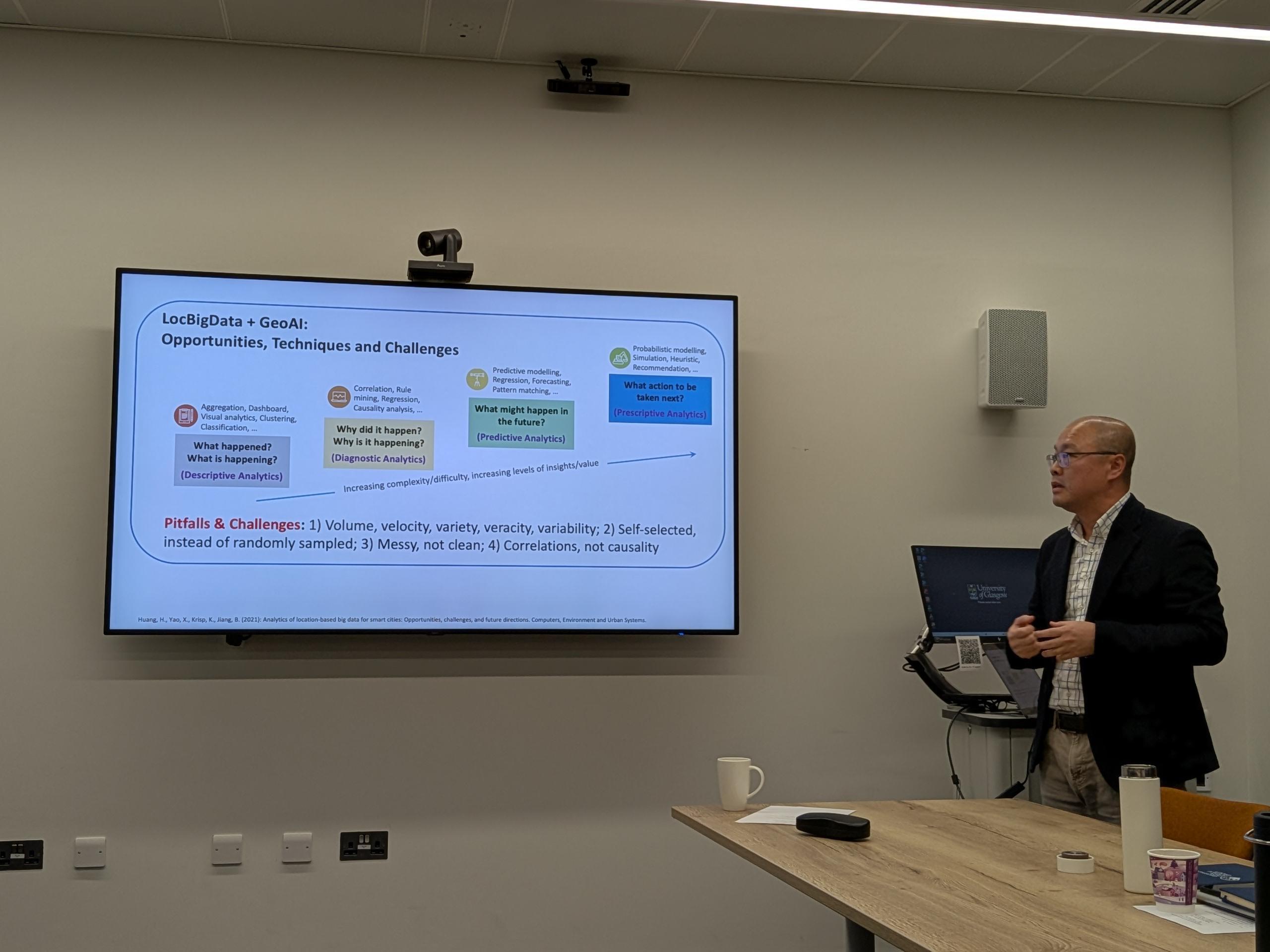
Meiliu Wu was honoured to participate in the 2025 GeoAI Workshop and Tutorial at Hong Kong Polytechnic University, an inspiring forum for interdisciplinary exchange on GeoAI advancements. The event provided valuable opportunities to engage with cutting-edge research and collaborative discussions.
• Presentation: 2025 Academia Sinica Geospatial Forum ✨
Meiliu Wu presented a newly accepted ACM SIGSPATIAL 2025 paper on Geo-Foundation Models at the 2025 Academia Sinica Geospatial Forum in Taipei. The forum fostered forward-looking dialogue on the future of geospatial intelligence, education, and research collaboration.
• Panellist: “Will AI and robots save our economy and planet?”✨
In August, Prof. Basiri, served as a panellist during the Scottish Festival of Politics in Edinburgh.
• Panellist: "Socially Responsible AI & Inclusion" and Poster:" Electoral Abstention and Census Nonresponse"✨
Prof. Ana Basiri served as a panellist at the Royal Statistical Society International Conference that took place in Edinburgh last September. James Ackland was also at the conference presenting a poster on Electoral Abstention and Census Nonresponse.
• Symposium: Lovelace-Hodgkin Symposium on AI Ethics ✨
In early October the Centre for Data Science and AI partnered to host The Lovelace-Hodgkin Symposium on AI Ethics at the University of Glasgow. The first day featured thought-provoking keynotes, followed by a dynamic workshop and panel discussion on day two.
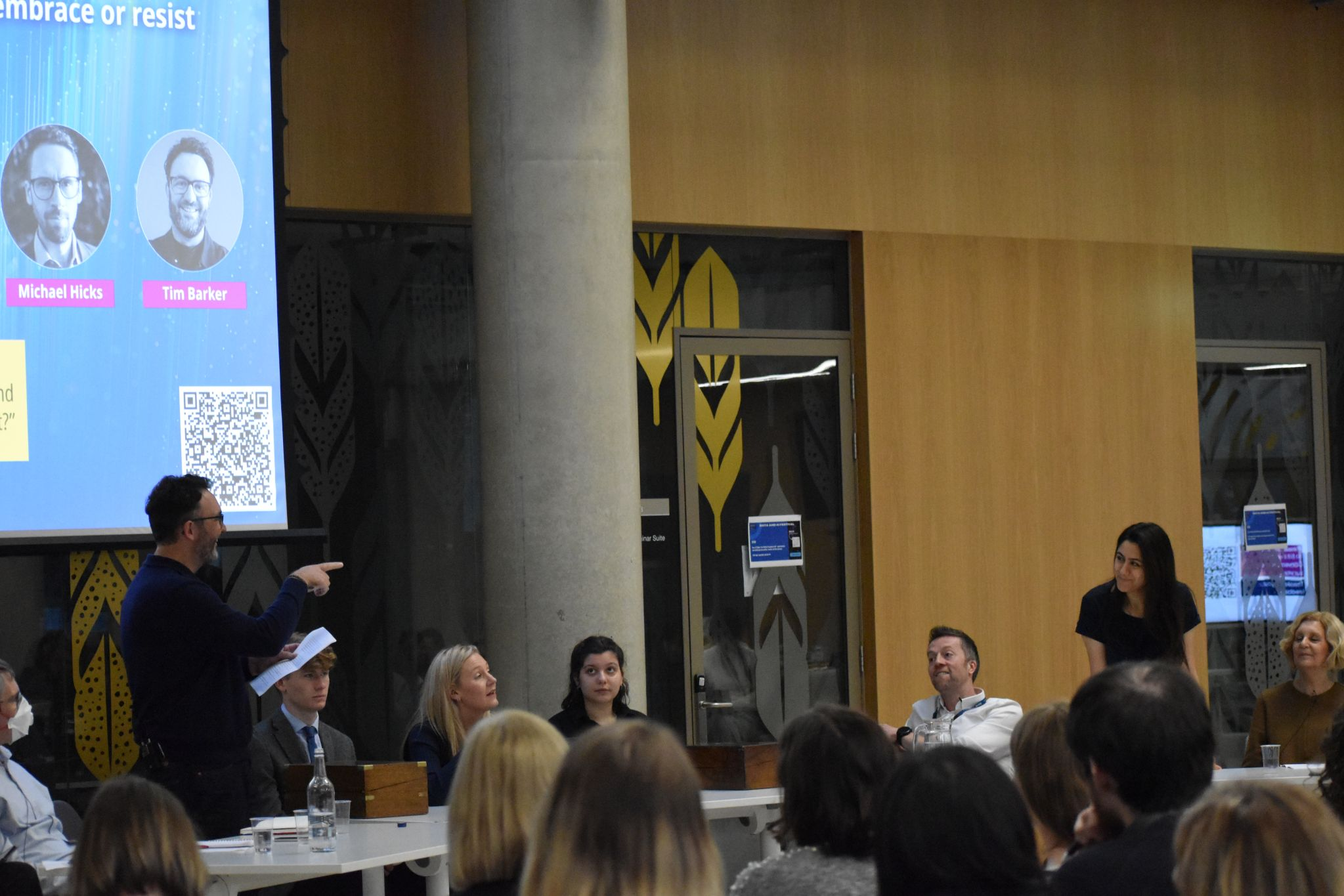
• Debate: Artificial Intelligence in Academia: Embrace or Resist ✨
Prof. Ana Basiri served on the supporting side of a riveting debate as part of the Data Science and AI Festival in October. The room was packed and the argument was heated!
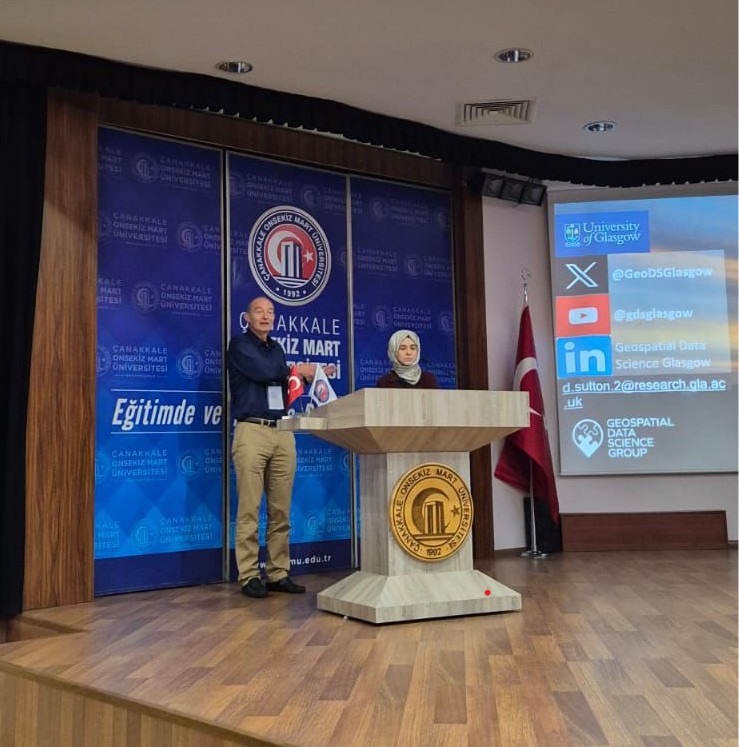
• Conference Presentation: “Age Matters: Demographic based Perceptions of Included Location Information” ✨
Merve Polat Kayali and Dominick Sutton represented the group at the ISPRS GeoVisions 2025 conference in Çanakkale, Türkiye. They presented their paper on how people value location information across different age groups, offering fresh insights into how place based data is perceived.
🧭 Team News
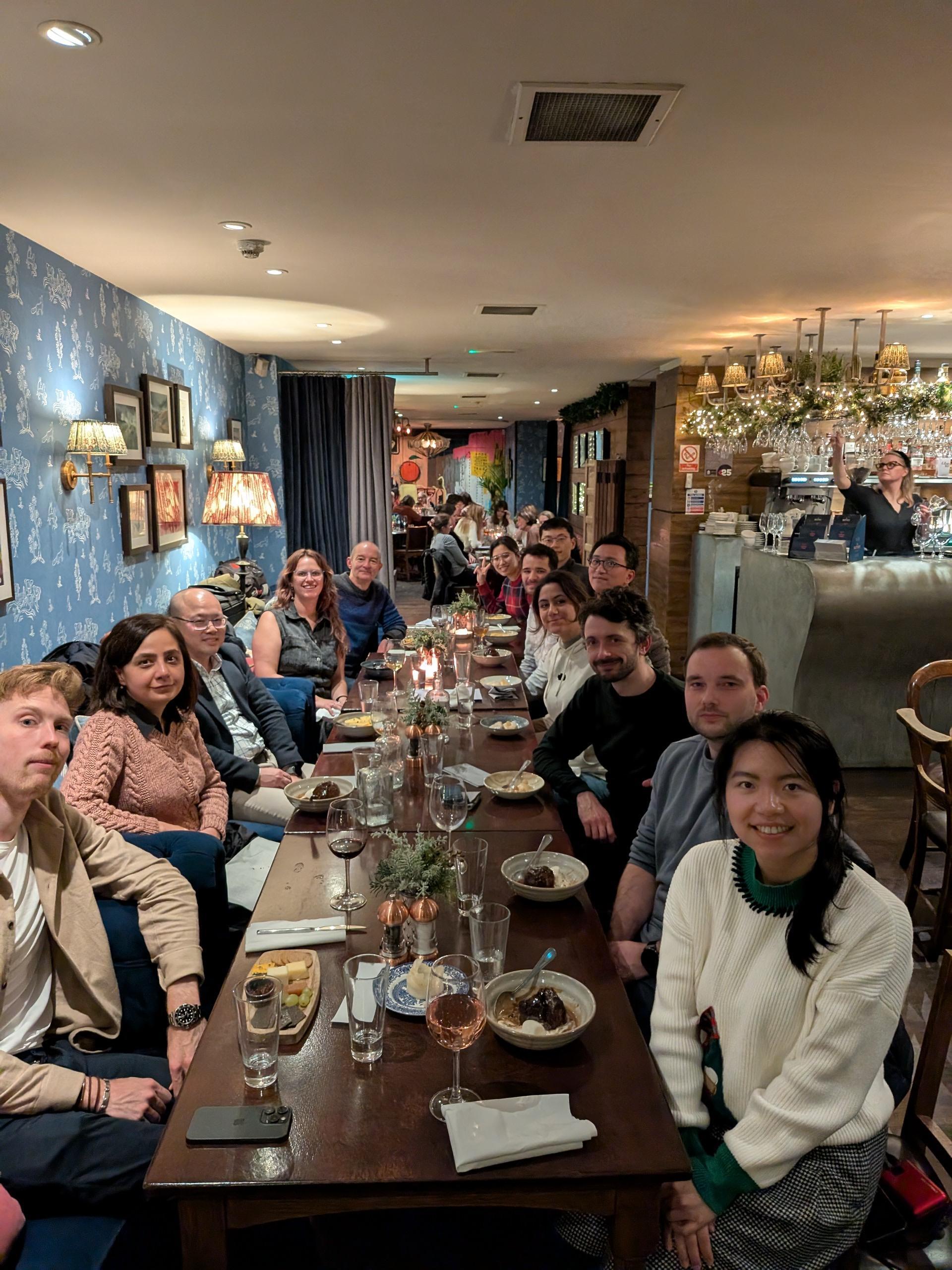
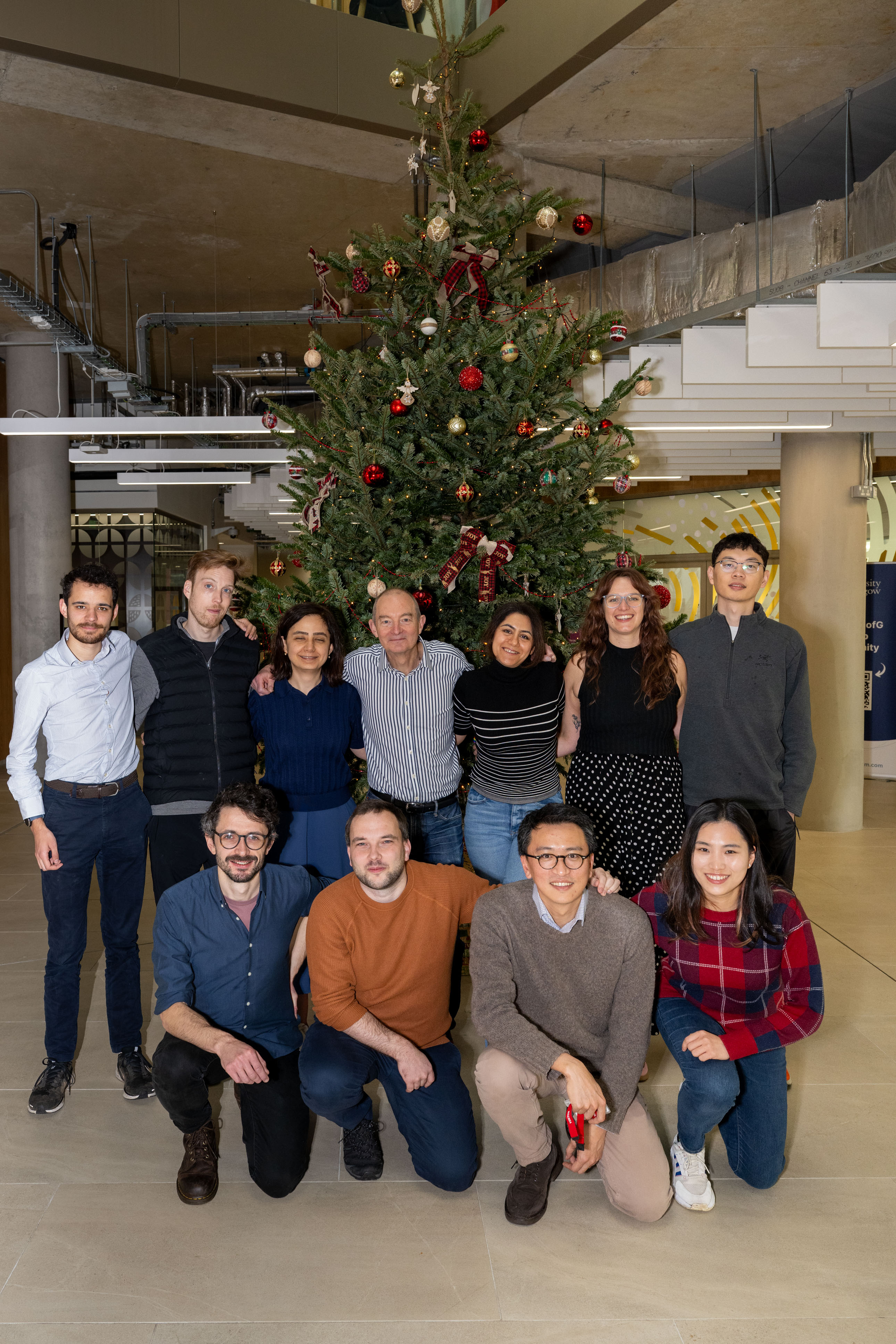
• Quarterly Development Day
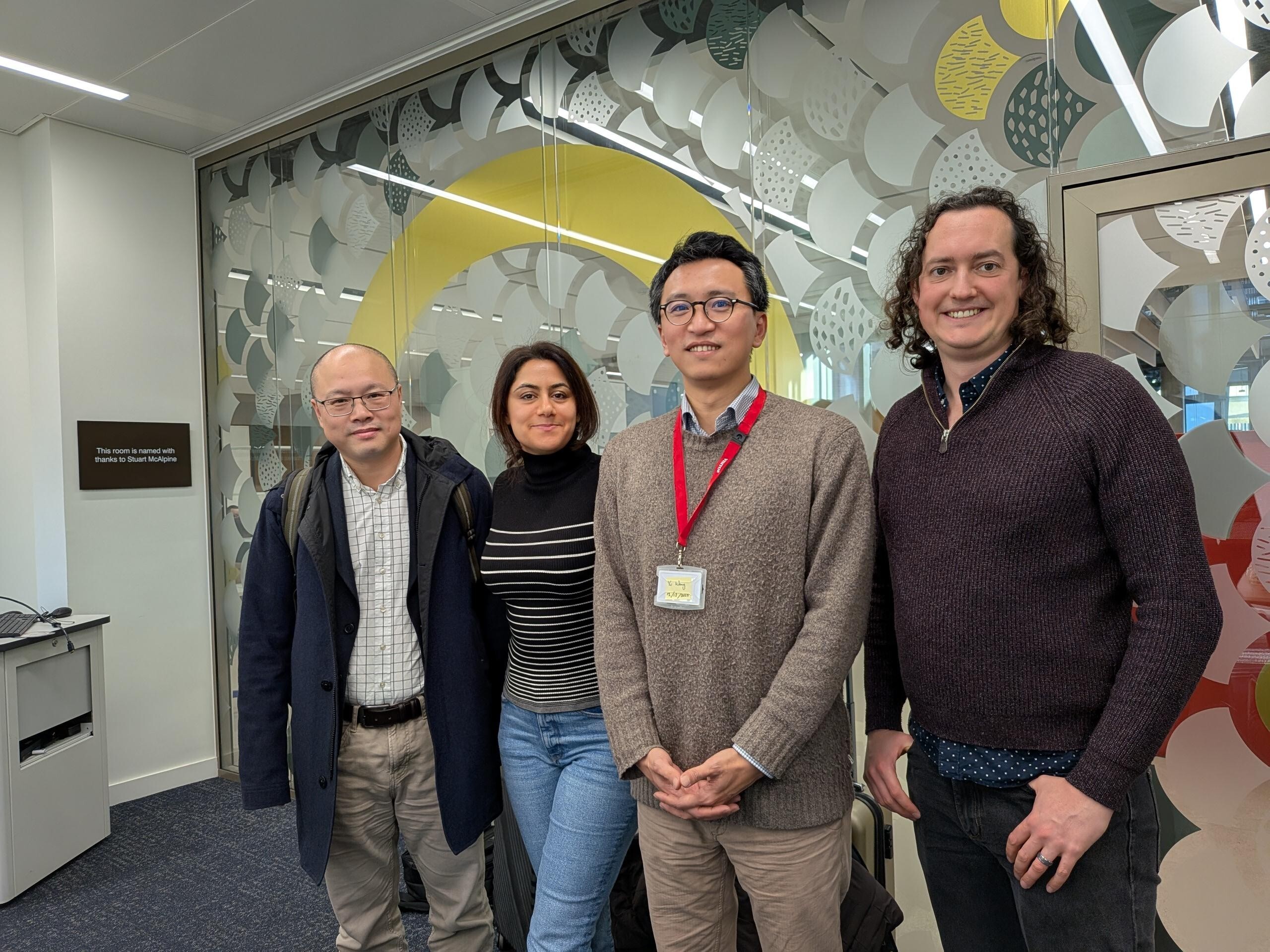
In December, the GDSG team gathered in Glasgow for our quarterly Development Day, featuring end-of-year reflections and future planning for 2026.
• Viva Examination: Yu Wang
Yu Wang presented his Viva in December passing with minor corrections. Congratulations, Yu!
• Team Spotlight: Piet Gerrits
Originally from the Netherlands, Piet, is a geospatial data scientist whose research uses historical data and spatial analysis to uncover patterns in land use and population change. His PhD focuses on reconstructing historical population datasets for Turkey and Bulgaria, combining advanced modelling techniques to better understand long-term human–environment interactions.
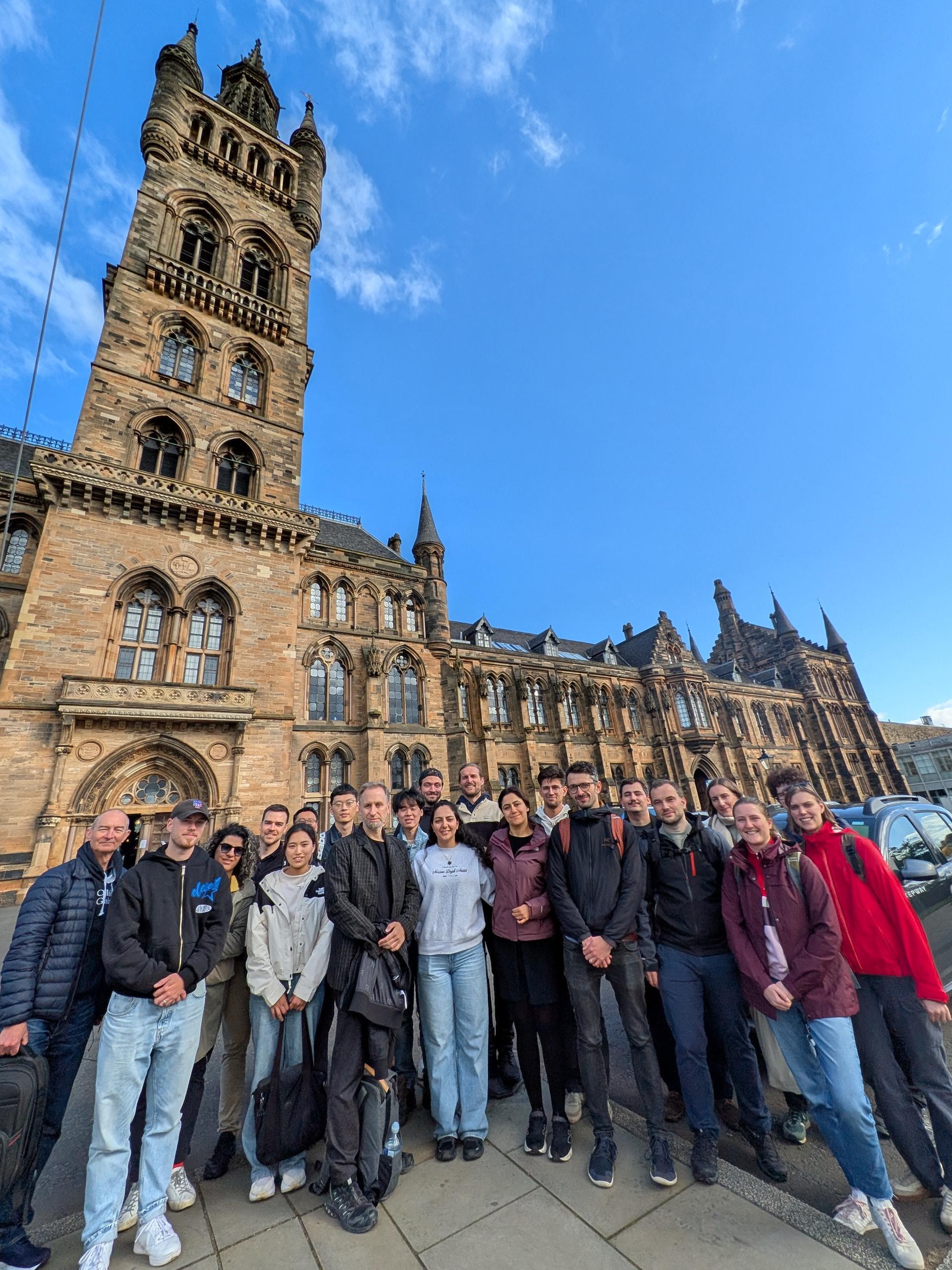
• International Visit: The University of Vienna Knowledge Exchange
In September, 20 Masters students from the University of Vienna along with their advisors visited our researchers in Glasgow. We gained new insights, connected with brilliant researchers, and were able to share some of what Scotland so special.
🗓️ Upcoming Events
• Societal Impacts of Digital Twins Conference | Prof. Ana Basiri will be giving a keynote | 30-31th March, 2026
• GISRUK Conference | This is a great place to connect with our researchers | 14-17th April, 2026
• GEOAI 2026 | Will be attended by many of members of our group | 3-6th June, 2026
• Glasgow Science Festival | Co-hosted by University of Glasgow | 4-14th June, 2026
• AGILE 2026 | Group members will be presenting and attending | 16-19th June, 2026
📨 Stay Connected:
🌐 Website
🔗LinkedIn
🐦Twitter/X